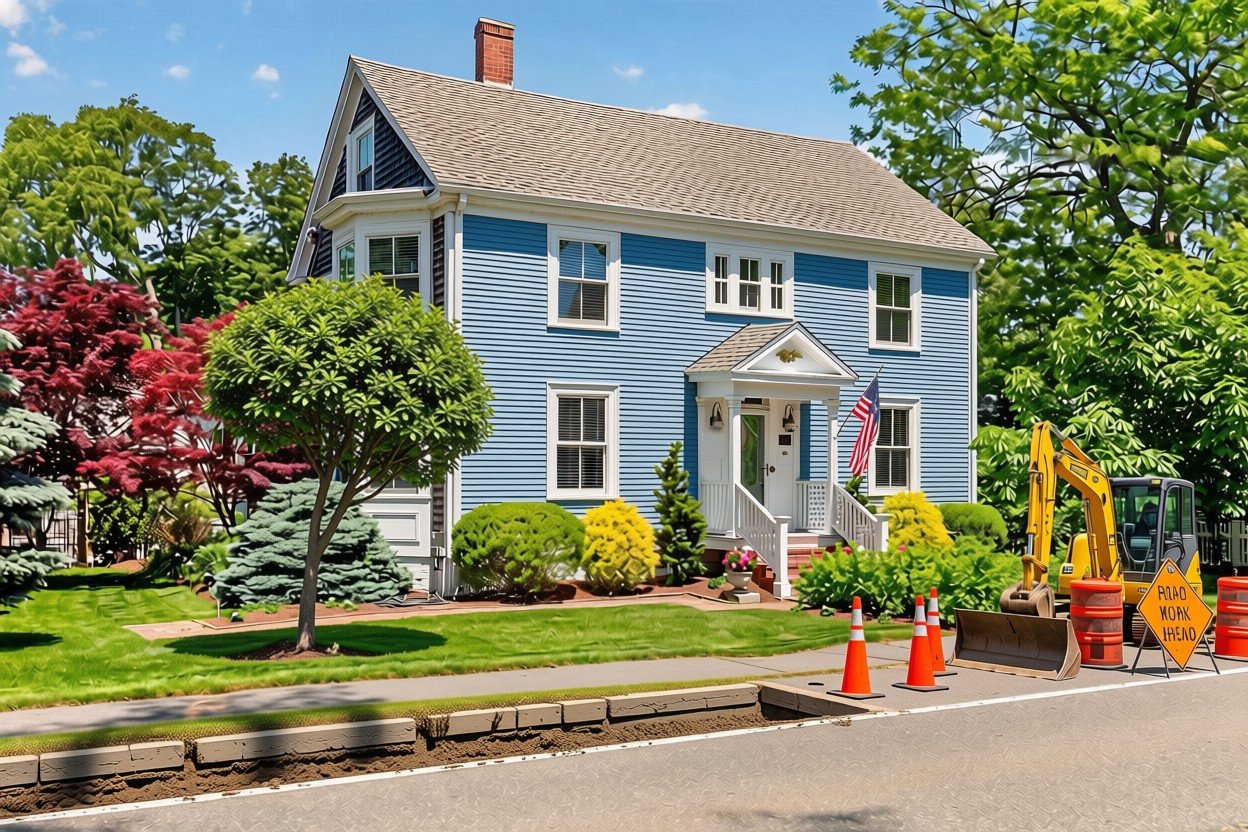
Quick answer: Several Cape Cod towns, including Chatham, Orleans, Harwich, Dennis and Yarmouth, are installing town sewer to cut nitrogen pollution under Massachusetts' 2023 Title 5 and watershed permit rules. When sewer reaches your street, the Board of Health orders you to connect, usually within one to two years. The owner typically pays for the connection on their own property, which can cost from under $10,000 to more than $35,000. Help is available through a state tax credit of up to $18,000, low- and no-interest Cape Cod AquiFund loans, and some town programs. Brewster is the exception: it's meeting its nitrogen goals largely without a town-wide sewer system.
In this guide: Why sewer is coming · How connecting works · Costs · Financial help · Chatham · Orleans · Harwich · Dennis · Yarmouth · Brewster · Pros and cons · Checklist · FAQ
At showings and open houses I host on the Cape, sewer comes up frequently. Buyers want to know whether a house is on it, or when it will be. Sellers want to know what it means for their price. Neighbors stop by just to ask what the trucks on Route 28 are doing. And if you've driven anywhere on the Cape lately, you already know the region's newest seasonal attraction: the detour. I hit one almost every time I leave the house. At this point my GPS just sighs and says "good luck."
There's a lot to cover, and every town works a little differently. This guide hits what matters most and links to each town's official pages. For a specific property, your town's wastewater or health department has the final word.
Why are Cape Cod towns installing sewer systems?
Most Cape homes use septic systems, which handle bacteria well but remove little nitrogen. That nitrogen seeps through groundwater into our bays and ponds, feeding algae blooms and damaging shellfish beds.
In July 2023, MassDEP designated about 30 Cape watersheds in 14 towns as Nitrogen Sensitive Areas. Each town had two years to choose: get a watershed permit and cut nitrogen town-wide (usually with sewer), or leave homeowners to upgrade their own septic systems to nitrogen-reducing technology within seven years. Most towns chose the permit. That's why so many towns are building sewer now.
How do you connect a house to town sewer on Cape Cod?
- The town installs the main in your street, usually over two to three years per phase, and leaves a stub at your property line.
- You get a connection order from the Board of Health. The clock starts: one to two years, depending on the town.
- You hire a licensed engineer to design the connection, then a town-licensed contractor to install it.
- Gravity or grinder pump. Most homes drain to the street by gravity. Low-lying homes, or homes on a low-pressure line, need a grinder pump.
- The old septic is abandoned under Title 5, the town signs off, and sewer bills begin.
My best tip: don't wait for the letter. When a whole neighborhood gets orders at once, engineers and contractors book up fast. Orleans had to extend its first connection deadline by a year because of exactly that backlog.
How much does a sewer connection cost on Cape Cod?
Think of it in three parts:
- The town's system is paid through property taxes, betterments on connecting properties, short-term rental tax revenue, or a mix, depending on the town. A betterment is recorded against the property, can usually be paid over many years on the tax bill, and has to be addressed at a sale.
- Your private connection is almost always the owner's cost. Orleans estimates $5,000 to $7,000 for engineering and $5,000 to $30,000 for construction on a single-family home. A grinder pump can add $7,000 to $15,000, unless your town provides one (Chatham does).
- The ongoing sewer bill, usually based on water use, replaces septic pumping and maintenance.
What financial help is available for sewer connections?
- State Title 5 tax credit: 60% of up to $30,000 in costs, for a maximum credit of $18,000, carried forward up to five years. Principal residences only, and you'll need a verification letter from the town. (Mass. DOR)
- Cape Cod AquiFund loans: up to 20 years. Required sewer connections can qualify for 0% or 2% based on household income, and homes listed for sale can qualify at 5%. (capecod.gov/aquifund · 774-330-3010)
- Town programs: some towns, like Orleans, offer connection grants. Ask your health department.
Cape Cod sewer projects by town (November 2026)
Every town is running its own program on its own schedule. Here's the short version for each, plus the official pages where you'll find maps, schedules and the fine print. Schedules change often. Always confirm details for a specific address with the town.
Chatham sewer project
Including Chatham Center, North Chatham, South Chatham, West Chatham and Chathamport
- Where it stands: Chatham is one of the furthest along on the Cape. Its original downtown sewer dates to the 1960s, it has been expanding steadily since 2012, and its treatment plant also takes flow from parts of Harwich. The current Phase 1F-1 extension (Cedar Street and nearby neighborhoods) is expected to take roughly two to two-and-a-half years to build.
- Connecting: Connection letters go out after construction is finished. The town's latest project materials give owners two years to connect, but older orders allowed one, so confirm the deadline on your letter.
- Costs: Chatham pays for its system through property taxes rather than betterments. Even better, the town provides one grinder pump free to residential owners who need one, which brings those connections close to the cost of a standard gravity hookup.
- Detour alert: While crews work on Cedar Street, the posted detour runs via Battlefield Road and Stage Harbor Road. Plan accordingly.
- Official info: Chatham Sewer Construction Project · Sewer phasing map (PDF) · Sewer Department rules (PDF)
Orleans sewer project
Including Orleans Center, East Orleans and South Orleans
- Where it stands: Phase 1 downtown is built, including a treatment plant on Overland Way that serves about 1,090 connections. Phase 2 (Meetinghouse Pond) owners were scheduled to get connection notices in January 2026, with a January 2027 deadline. Phase 3 (Lakes and Ponds) is next, and owners can already look up their proposed sewer stub location by street. About 60% of Orleans will eventually be sewered, across 16 phases through 2067.
- Connecting: Owners have one year from the Notice to Connect. After that, the Board of Health can call a hearing and charge $200 per day. The town keeps lists of engineers and licensed installers on its website.
- Costs: The town's own single-family estimates are $5,000 to $7,000 for engineering, $5,000 to $30,000 for construction, and $7,000 to $15,000 more for a grinder pump if needed. Betterments cover 20% of each phase's cost, are based on water use, and can be financed for 30 years (at 0% interest so far). At a sale, the betterment can be paid off or transferred to the buyer, so address it in the purchase agreement.
- Who to call: John Nelson, Water/Sewer Program Coordinator, 508-240-3700 ext. 2319.
- Official info: Need to Connect to Sewer? · Wastewater Infrastructure · Orleans Sewer System FAQ (PDF)
Harwich and Harwich Port sewer project
Including Harwich Center, Harwich Port, West Harwich, East Harwich, North Harwich and Pleasant Lake
- Where it stands: Earlier phases are connected and send flow to Chatham's treatment plant. Phase 3 in East Harwich has been under construction since late 2024. Phase 3A (the Great Sand Lakes area and part of Queen Anne Road) began in 2026.
- Connecting: East Harwich owners can expect connection orders around late 2027 or 2028, with two years to connect. The Health Department can provide copies of your existing septic plan, which your engineer will need.
- Helpful extra: Harwich publishes a Homeowner's Sewer Connection Guidebook and a "5 Steps to Hook Up" guide, two of the best plain-English resources on the Cape.
- Official info: Harwich Wastewater Information · Homeowner's Sewer Connection Guidebook (PDF)
Dennis and Dennis Port sewer project
Including Dennis Village, Dennis Port, West Dennis, South Dennis and East Dennis
- Where it stands: Voters approved about $246 million for Phase 1 in October 2024. It includes a new Water Resource Recovery Facility on Theophilus F. Smith Road in South Dennis and roughly 16 miles of new pipe serving the Route 28 commercial corridor, neighborhoods near Bass River, and the Route 134 area of East and West Dennis. Both the plant and the pipe network are under construction now. As of November 2026, crews are working on Route 28 between Horsefoot Cove and Uncle Barney's Road in West Dennis, on Route 28 from Trotting Park Road toward Route 134, and on Old Dennis Approach. Phase 1 also includes streets such as Lower County Road, Upper County Road, Old Bass River Road and East-West Dennis Road.
- What comes next: Dennis's wastewater plan lays out eight phases over about 40 years. Phase 1 covers the Route 28 commercial corridor and neighborhoods near Bass River and East-West Dennis (Route 134). The 2021 plan penciled in Phase 2 (areas near the treatment plant and north and west of Swan Pond) for construction around 2029 to 2030, and Phase 3 (most of Dennis Port and the hotel area along the southeast shore) for around 2034 to 2035. Later phases reach areas near Route 6 and Follins Pond. The timing and order can change, so check the town's map for your street.
- Costs: The plan calls for the town as a whole to pay for the system, rather than charging large betterments to sewered homes. Funding sources include property taxes, a 1% real estate tax surcharge for a Water Infrastructure Investment Fund, a rooms tax increase from 4% to 6% (which covers short-term rentals), revenue from the town's landfill solar farm, and low-interest state loans. Owners still pay for the connection on their own property, and homes that need a grinder pump are responsible for maintaining it.
- For buyers and sellers: Where a home sits in the phasing matters. In a Phase 1 area, a buyer should plan on connecting within the next few years and budget for it. In a later-phase area like most of Dennis Port, sewer may be a decade or more away, so the condition of the existing septic system and its Title 5 inspection still carry a lot of weight in the deal.
- Connecting: Connection orders will follow once the plant is running. If you own in the Phase 1 area, now is a good time to line up an engineer. The town notes that owners with newly installed Title 5 systems may get a grace period. You can already look up your property's sewer stub location on the town's interactive map.
- Official info: Dennis Wastewater FAQ · Dennis Wastewater page and stub-location map · Weekly Wastewater Project Updates · Phase 1 streets by contract (PDF) · Email alert sign-up · Dennis Comprehensive Wastewater Management Plan
Yarmouth and Yarmouth Port sewer project
Including South Yarmouth, West Yarmouth, Yarmouth Port and Bass River
- Where it stands: Voters approved about $207 million for Phase 1 in 2023. Sewer lines are going in along Route 28, South Shore Drive and nearby streets, targeting the Bass River, Parkers River and Lewis Bay watersheds. A new treatment plant at Buck Island Road is under construction (a $97.5 million contract, reported about three months behind schedule in May 2026). The full program will reach about two-thirds of town over roughly 40 years. Phase 1 focuses on the south side, so north-side areas like Yarmouth Port should check the town map.
- Costs: Short-term rental tax revenue is expected to cover about 40% of the project, and homeowners in the service area about 15% through betterments. Town staff are still modeling betterment and user-fee amounts, so firm numbers aren't out yet.
- Getting around: Expect lane closures and detours along Route 28 during construction season.
- Official info: Yarmouth Wastewater Construction Project
Brewster: nitrogen cleanup without town-wide sewer
Including West Brewster and East Brewster
- Where it stands: Brewster is the exception. It isn't planning a large sewer system. Thanks partly to geography, it is meeting its nitrogen targets through watershed permits for Pleasant Bay and the Herring River, fertilizer reductions at the town golf courses, and other non-sewer approaches. The state requires a backup sewer plan, which the town has on file.
- What it means for owners: Most Brewster homeowners aren't facing a mandatory sewer connection. Innovative/alternative (I/A) septic systems could play a role in some areas down the road.
- Official info: Town of Brewster
Neighboring towns
Barnstable (including Hyannis and Centerville) and Eastham have their own wastewater plans too. See the Town of Barnstable and Eastham's wastewater FAQ.
Sewer on Cape Cod: pros and cons for buyers and sellers
Sewer isn't simply good or bad for a sale. It depends on where a property is in the process and which side of the table you're on. Here's how it looks from each side.
For buyers
Pros
- No septic headaches. A connected home means no pumping, no Title 5 inspection and no risk of a failed system right after closing.
- More predictable long-term costs. Once a home is connected, the big expense is behind it. Betterments can often be spread over decades on the tax bill.
- Cleaner water over time. Healthier ponds, bays and shellfish beds are a big part of why people buy here.
- Possibly more flexibility down the road. Without a septic system limiting the lot, some renovation plans get easier, though towns still set their own flow limits.
Cons
- You may inherit the connection. If a home has an order but hasn't connected, the cost and the deadline can become yours.
- The betterment may come with the house. In some towns, an unpaid betterment can transfer to the buyer.
- A new monthly line item. Sewer bills replace septic pumping, and they arrive every quarter.
- Unknown final numbers. In towns still building, like Dennis and Yarmouth, betterment and sewer-rate figures aren't final yet.
- Construction season. Expect torn-up roads, trenching on the property during the connection and detours.
For sellers
Pros
- A connected home is a selling point. It takes septic questions off the table and can make for a smoother inspection period.
- A cleaner story for buyers. "Already connected, paperwork in hand" tends to keep buyers confident.
- Financing is available, even while listed. AquiFund offers a loan option for properties on the market.
Cons
- Upfront cost before you sell. Connecting before listing means paying for work you may not fully recoup. The state tax credit only applies to a primary residence.
- Price negotiations. If an order is pending, buyers will often ask for a credit or a price reduction to cover the connection.
- Timing. Engineers and contractors book up when whole neighborhoods get orders at once, which can delay a listing if you decide to connect first.
- Smaller net proceeds. If the betterment has to be paid off at closing, it comes out of the sale.
The bottom line
What usually causes trouble in these deals is uncertainty, not sewer itself. Buyers and sellers who know the property's status (connected, ordered or not yet scheduled), the likely costs and who's paying for what can work out a fair deal. That's where good preparation and clear disclosure pay off.
Buying or selling? Your Cape Cod sewer checklist
Whichever side of the table you're on, get these answers early:
- Status: Is the property in a sewer service area, and which phase? Is it connected, under an order, or not yet scheduled?
- Paperwork: If it's connected, the connection permit, the septic abandonment record and the town's verification letter. If not, the Title 5 inspection report.
- Deadline and payer: If an order is out, when is it due, and who pays: the seller before closing, or a credit to the buyer?
- Betterment: Is one recorded or expected, and will it be paid off at closing or transferred? Have your attorney confirm.
- Nitrogen Sensitive Area: Sellers with septic in these areas should provide MassDEP's NSA disclosure. You can check any address on MassDEP's lookup map.
- Future plans: Sewer doesn't automatically allow more bedrooms. Many towns set flow limits, so confirm before planning an addition.
Cape Cod sewer FAQ
Do I have to connect if sewer comes to my street? In most cases, yes. Once the Board of Health issues a connection order for your property, connecting is mandatory within the town's deadline.
I just put in a new septic system (or mine passed Title 5). Do I still have to connect? Usually, yes. Once you're in a sewer service area and get an order, connecting is generally required, even with a newer or passing system. The good news is that some towns allow a deferral based on the age or type of your system, which can buy you several years before you have to connect. The rules vary by town, a deferral usually delays the connection rather than excusing it, and it may not waive a betterment. If you've recently invested in a septic system, contact your town's Board of Health before your connection deadline to ask what you qualify for.
Can I keep my old septic tank? No. It has to be properly abandoned under Title 5 once you connect.
Does the state tax credit work for my vacation home? No. The Title 5 credit only applies to a principal residence.
Who do I call with questions about a specific property? Start with the town's DPW or water/wastewater department for schedules, and the Board of Health for connection orders and deadlines.
When will sewer come to my street? Each town's Comprehensive Wastewater Management Plan maps out the phases. Check the town's phase map (linked in the town-by-town guide above) or call the town's wastewater department with your address. If your street isn't scheduled at all, your town's watershed plan may still affect you, for example through I/A septic systems.
What is a sewer betterment? A betterment is a charge some towns place on properties that benefit from new sewer, to recover part of the cost. It's recorded against the property, can usually be paid over many years on the tax bill, and needs to be addressed when the home is sold.
Is my property in a Nitrogen Sensitive Area? You can check any address on MassDEP's Nitrogen Sensitive Area Address Lookup map. Sellers of homes with septic systems in these areas are expected to provide a disclosure to buyers.
Does connecting to sewer affect a home's value? There's no single answer, but many buyers see a completed connection as a plus: no septic pumping, no failed-system risk and no surprise connection bill after closing. A pending order with an unpaid connection is something buyers will factor into their offer.
Official Cape Cod sewer and Title 5 resources
- MassDEP Title 5 regulations (310 CMR 15.000)
- MassDEP Watershed Permit regulations (314 CMR 21.00)
- Buying or selling property with a septic system (Mass.gov)
- Title 5 tax credit (Mass. DOR)
- Cape Cod AquiFund loans (Barnstable County)
- Cape Cod & Islands Water Protection Fund (Cape Cod Commission)
About the Author
Shane Fierman is a real estate advisor and member of the Guthrie Schofield Group at Berkshire Hathaway HomeServices Robert Paul Properties. His family first came to the Cape as weekenders more than 16 years ago, and today they live here year-round in Yarmouth.
Shane wrote this guide because sewer comes up often at showings and open houses, and buyers and sellers deserve straight answers. He’s a homeowner and property investor himself, with hands-on construction experience. He’s also co-founder of Ashored Home Advisors, which handles renovation, strategic advisory and preparing homes for sale, and Ashored Property Management, which cares for homes year-round for residents, second-home owners and investors. So he looks at these questions the way his clients do: what it costs, what it means for value and what to do next.
He works with buyers and sellers across Chatham, Orleans, Harwich, Dennis, Yarmouth and Brewster, and makes a point of knowing these towns street by street: what’s changing, what’s coming and what it means for a home’s value.
Shane Fierman · 914.471.3997 · [email protected]
This article is general information as of November 2026 and is not legal or tax advice. Sewer schedules, costs and rules change. Always confirm details for a specific property with the town, your attorney and your tax advisor.